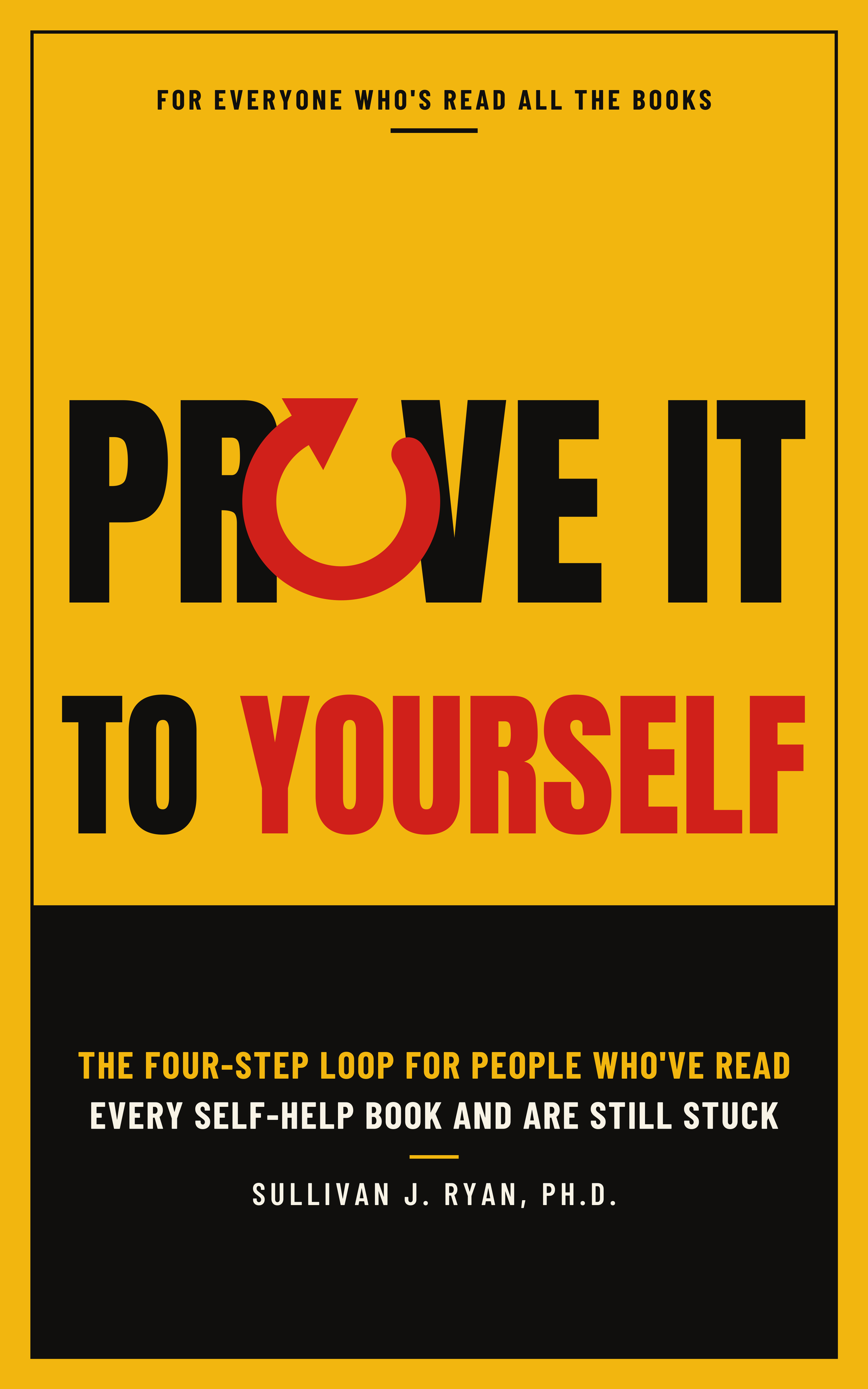
Feeling stuck is not a mood problem, a motivation problem, or a mystery. In most cases it is an evidence problem: every day without visible progress confirms the story that progress is impossible — and the story then guarantees another day without progress. The exit runs through the evidence, not the feeling.
The science here had a stunning plot twist. For fifty years, “learned helplessness” research seemed to show that bad experiences teach passivity. In 2016, Maier and Seligman returned to their own landmark work with modern tools and reversed it: passivity is the default. Control is the thing that is learned — through repeated experiences of your actions producing effects. And once learned, it generalizes to the rest of life.
Read that as instructions. You do not escape stuckness by feeling better first. You escape it by manufacturing small, undeniable experiences of action-producing-effect, until the machinery that overrides shutdown gets its reps.
The evidence-first way out
Write the stuck story in two sentences. “I can’t change careers; it’s too late.” Get it on paper where it can be examined. Ask the Evidence Question: what would count as proof that this story is wrong? Not proof of total transformation — the smallest piece. One reply to one message. One page written. One application sent. Create that piece within seven days, using a two-minute act on a daily trigger. Bank it, dated, in a notebook — and keep going, one line a day. Stories are old summaries of old records, and records update. Thirty lines in, even airtight stories take on water. The Proof Loop is the full protocol; the free journal is the ruled paper.
One boundary, stated plainly: if the stuckness is total, touches everything, and has for a long time, that pattern deserves real human support alongside any method. Reaching out is itself the first piece of evidence that you act.
- Stuck is an evidence shortage, not a character verdict.
- Passivity is the default; control is learned — through small acts that visibly work.
- Name the story, find its smallest counter-proof, create it this week, bank it.
Sources: Maier & Seligman, “Learned Helplessness at Fifty,” Psychological Review (2016) · Rotter on locus of control · Bandura on mastery experiences.